Are Solar Batteries Worth It? (Calculating Payback Period)
Find out if a solar battery is worth the cost. Calculate your payback period under TOU rules, NEM 3.0 export credits, VPP programs, and 2026 incentives.
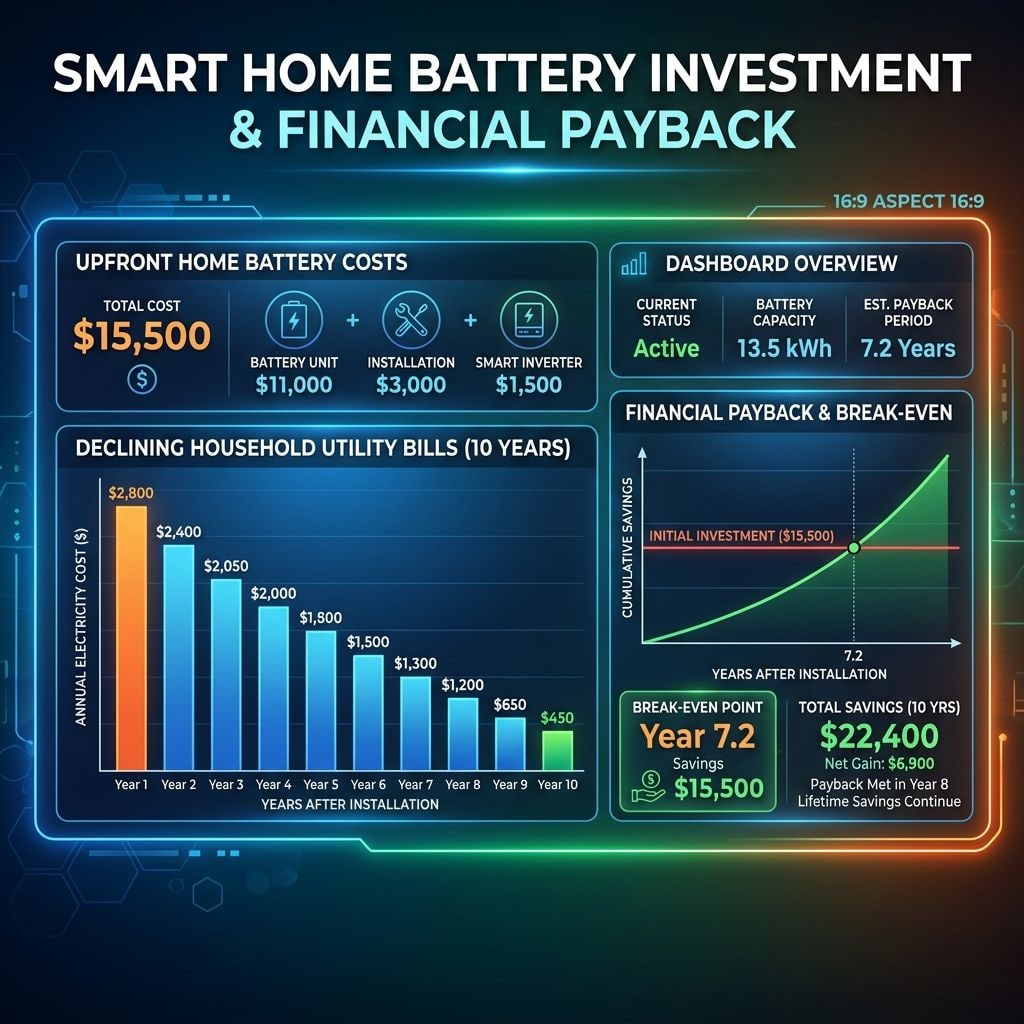
Adding battery storage to a home solar system represents a major financial decision. A decade ago, residential batteries were rare backups reserved for off-grid cabins. Today, solar storage has transitioned into a mainstream utility-saving appliance, driven by falling hardware prices and utility grid instability.
However, because home batteries are a significant upfront investment, homeowners want to know: are solar batteries actually worth it? Sizing your project requires analyzing time-of-use rate structures, Virtual Power Plant incentives, and avoided blackout insurance values. Here is our comprehensive financial analysis of solar battery payback periods.
The Financial Formula: How Do Batteries Save Money?
A home battery does not generate power—it saves power. It generates financial value in three distinct ways:
1. Time-of-Use (TOU) Rate Arbitrage
In regions with TOU rate structures, utilities charge high prices for electricity during late afternoon and evening peak hours (typically 4 PM to 9 PM) and cheap prices during the morning and night. A battery system automatically charges from cheap solar power during the day and discharges to power your home during expensive peak hours, preventing you from purchasing high-cost utility power.
2. Maximizing Solar Self-Consumption (NEM 3.0 Impact)
Under new utility tariffs like California's NEM 3.0, the credit you receive for exporting excess solar power back to the grid has been cut by roughly 75%. Instead of sending solar power to the grid for pennies, a battery lets you store that energy locally to use later, preserving the full retail value of every kilowatt-hour generated.
3. Earning Revenue via Virtual Power Plants (VPP)
Many utilities run VPP programs that pay homeowners directly to discharge power to the grid during emergency peaks. By enrolling your battery, you can earn $500 to $1,500 annually in performance credits, which directly shortens your system's payback period.
The 'Hidden' Value: Outage Security vs. Generators
Beyond direct utility bill savings, storage represents a reliable insurance policy. Contrast a battery with a traditional fossil-fuel standby generator:
Standby Generators: Noisy, burn expensive gas or propane, release carbon monoxide, and require frequent oil changes and mechanical maintenance. They also take 10 to 30 seconds to kick on during a blackout.
Batteries: Completely silent, require zero maintenance, release zero emissions, and switch on instantaneously (in under 10 milliseconds) during blackouts—ensuring computers, routers, and medical devices do not reset.
Sizing Your Solar Battery ROI (Payback Math)
To calculate your battery's payback period, weigh its net installed price against your annual savings:
For example, assume a turnkey battery project costs $14,000 fully installed:
If you live in a high-cost utility zone under TOU rules, your system generates $1,500 in annual utility bill savings. Enrolling in a utility VPP program yields an additional $300 in annual performance rewards. This brings your total annual savings to $1,800.
Payback Calculation: $14,000 (net cost) divided by $1,800 (annual return) yields an estimated payback period of 7.7 years. Because quality LFP batteries are engineered to last 10 to 15 years, the system will deliver net profits for several years after paying for itself.
Financing Choices: Cash vs. Leases in 2026
Under the July 2025 One Big Beautiful Bill Act (OBBBA), the Section 25D 30% federal clean energy tax credit is expired for cash and loan home battery purchases starting January 1, 2026. However, you can still optimize your project's financial structure using these options:
Third-Party Leases: Opting for a lease structure allows the solar developer (who retains system ownership) to claim the Section 48E commercial tax credit and pass the savings on to you in the form of lower monthly payments, resulting in immediate positive cash flow.
State Programs: Check for state-level incentives, such as California's Self-Generation Incentive Program (SGIP) or Maryland's energy storage tax credit, which offer upfront rebates regardless of your purchasing model.
Incentive Optimization for ROI
Under 2026 guidelines, cash and loan battery projects are not eligible for federal tax credits. To optimize your ROI, consider third-party leases or PPAs, which lower monthly payments by factoring in commercial tax credits, or check for state programs like SGIP.
Battery Payback Period Sizing Matrix
The table below compares estimated payback periods across different utility billing structures:
Solar Battery Payback Framework
| TOU Arbitrage + NEM 3.0 (e.g. California, Arizona) | Annual Savings: $1,200 - $1,800 | Payback: 7 - 9 Years |
| High Flat Utility Rates (e.g. Northeast US) | Annual Savings: $600 - $900 | Payback: 11 - 13 Years |
| Low Flat Rates + Full Net Metering (e.g. Northwest US) | Annual Savings: $200 - $400 | Payback: 16+ Years |
ROI Sizing Recommendations & Next Steps
Whether a battery is financially worth it depends on your local utility company's tariff structure. If you live in an area with high peak electric rates or net metering penalties, adding battery storage yields a rapid payback period. To calculate your payback schedule under current utility tariffs, use our interactive ROI calculator tool below:
Evidence
Sources and methodology
Article FAQ
Common questions
Can I add a battery later if I already have solar?
Yes. You can add an AC-coupled battery (like the Enphase 5P or FranklinWH) to any pre-existing solar array. It connects directly to your main electrical panel without requiring you to replace your existing solar inverter, keeping retrofit costs low.
Does a solar battery increase home equity?
Yes, though the exact amount varies. Homebuyers highly value the security of automatic blackout protection and low utility bills. Studies indicate that homes with modern solar-plus-storage systems sell faster and at a premium compared to homes with solar panels alone.
What is the lifespan of a solar battery?
Modern Lithium Iron Phosphate (LFP) home batteries are engineered to last 10 to 15 years under daily cycling. Most manufacturers guarantee the battery will retain at least 70% of its original capacity at the end of the 10-year warranty period.

Written by
Battery Planning Editorial Team
The official editorial and research team for Battery Planning, providing expert battery sizing guides, specifications audits, and cost estimation planners.