Best Home Battery Backup Systems: Top Residential Energy Storage
Compare the best home battery backup systems of 2026. Profile Tesla Powerwall 3, Enphase IQ Battery 5P, and FranklinWH aPower across capacities, specs, and warranties.
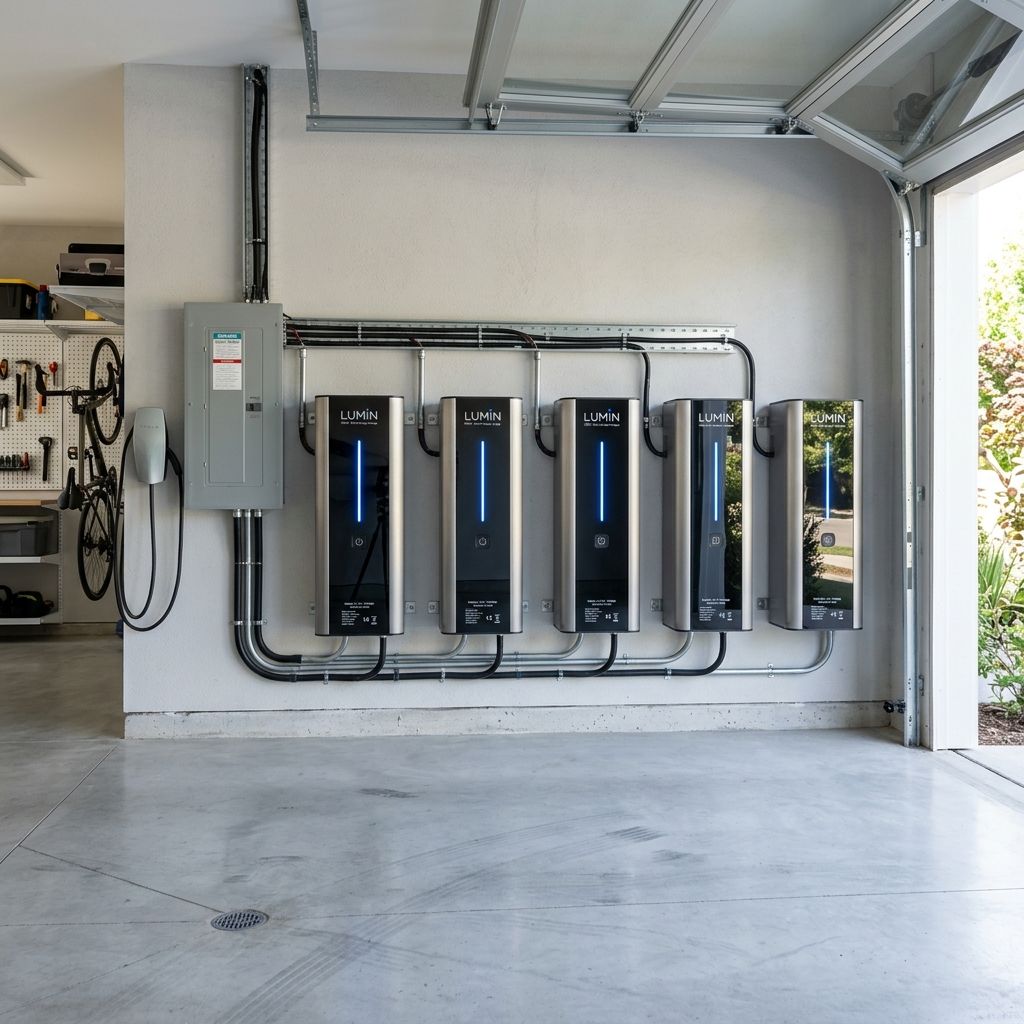
As home battery backup technology matures and electric utility grids face increasing strains from extreme weather, residential energy storage has become a core component of modern home design. Today's home battery systems are safer, more efficient, and smarter than their predecessors—largely moving to Lithium Iron Phosphate (LFP) chemistry.
However, with major manufacturers competing for market dominance, choosing the correct system can be challenging. Whether you prioritze maximum startup output to run central AC units, modular scaling to match a tight budget, or seamless integration with standby generators, different systems excel in different roles. This guide analyzes the best home battery backup systems of 2026.
How We Evaluate the Best Home Battery Systems
To provide objective evaluations, we grade residential storage systems across five core performance criteria:
Usable Capacity (kWh): The total quantity of electricity the battery stores that you can safely consume without damaging the cells.
Continuous Power Output (kW): The rate at which the battery can continuously deliver power to run your household appliances over hours.
Peak Surge Output (kW): The maximum short-duration power (typically 1 to 10 seconds) the battery can supply to start heavy inductive compressor motors.
Round-Trip Efficiency (%): The efficiency of the charging and discharging cycle—indicating how much energy is lost as conversion heat.
Warranty Life: The guarantee that the battery will maintain a specified percentage of its original capacity (usually 70%) at the end of a 10-year period.
Continuous vs. Surge Power
Continuous power determines how many appliances you can run simultaneously for hours, whereas peak surge power determines whether the battery can supply the split-second starting currents required by AC compressors or well pumps.
1. Tesla Powerwall 3 (Best Overall for New Solar)
The Tesla Powerwall 3 is the leading residential energy storage unit on the market. It is a DC-coupled hybrid battery system that incorporates a high-power solar inverter directly into the casing, streamlining hardware design and lowering installation complexity.
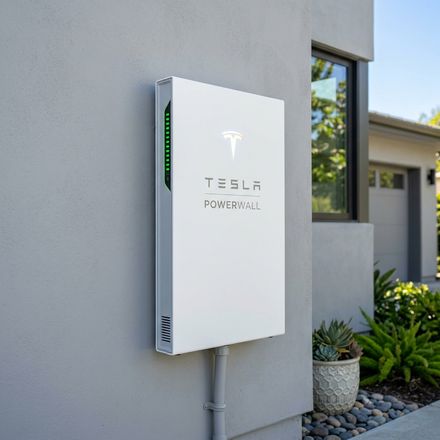
Tesla Powerwall 3
A high-capacity, DC-coupled LFP storage system with an integrated hybrid inverter. Perfect for new solar-plus-storage setups.
Compare Powerwall 3 SpecsPros
- Massive 11.5 kW continuous power output on a single unit.
- Integrated solar inverter eliminates the need for separate equipment.
- Outstanding value per kilowatt-hour of usable capacity.
Cons
- Cannot easily retrofit onto existing solar arrays without adding custom AC-coupling panels.
- Lacks native direct support for standby generators.
2. Enphase IQ Battery 5P (Best for Modularity & Retrofits)
The Enphase IQ Battery 5P is a compact, AC-coupled battery utilizing a distributed microinverter architecture. Because it communicates seamlessly with Enphase solar arrays, it is the premier choice for retrofitting storage onto existing solar systems.
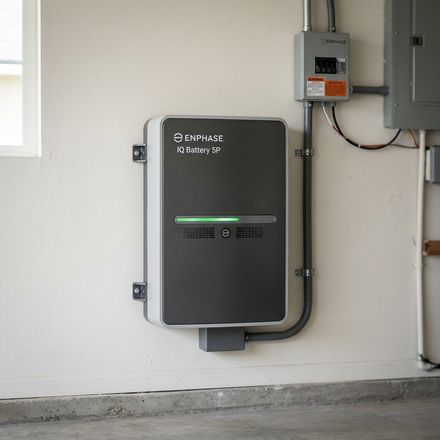
Enphase IQ Battery 5P
A modular, AC-coupled storage system utilizing distributed microinverters. Perfect for incremental scaling and simple solar retrofits.
Check Enphase EconomicsPros
- Modular 5 kWh design allows sizing storage exactly to your budget.
- AC-coupled design retrofits onto any existing solar system.
- Industry-leading 15-year warranty when paired with Enphase controls.
Cons
- Lower base power output per unit (3.8 kW continuous).
- Higher average cost-per-kWh when purchasing only a single module.
3. FranklinWH aPower (Best for Heavy Loads & Generators)
The FranklinWH aPower is a robust, heavy-duty LFP battery designed for reliable whole-home backup. Managed by the aGate smart energy controller, it is the leading system for homeowners who want to integrate standby generators alongside their solar storage.
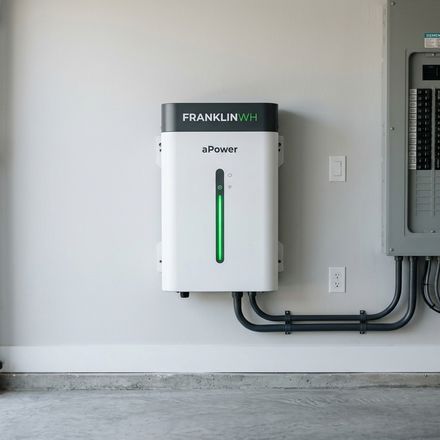
FranklinWH aPower
A heavy-duty AC-coupled LFP battery featuring generator integration ports and a smart energy controller gateway.
Evaluate FranklinWH PaybackPros
- Supports direct plug-and-play integration with backup standby generators.
- aGate controller handles smart load-shed controls automatically.
- Very high starting surge capacity (up to 10 kW for 10 seconds).
Cons
- Equipment footprint is heavy and requires professional structural mounting.
- Slightly higher entry equipment and gateway price point.
Home Battery Specifications Comparison Matrix
The table below compares the critical technical specifications of the leading home battery backup systems:
Best Home Battery Specifications Comparison
| Tesla Powerwall 3 (13.5 kWh Usable / 11.5 kW output) | LFP Chemistry / DC-Coupled / Integrated Solar Inverter |
| FranklinWH aPower (13.6 kWh Usable / 5.0 kW output) | LFP Chemistry / AC-Coupled / Standby Generator Support |
| Enphase IQ Battery 5P (5.0 kWh Usable / 3.8 kW output) | LFP Chemistry / AC-Coupled / Modular Microinverters |
Sizing Recommendations & Next Steps
Choosing the best home battery backup system requires matching your specific household load profile, solar configuration, and financing budget to the correct hardware architecture. While the Tesla Powerwall 3 is the leading choice for new solar installs, modular systems like the Enphase 5P and generator-friendly options like the FranklinWH aPower are superior for specialized applications. To estimate your payback period and tax credits, use our interactive ROI calculator tool below:
Evidence
Sources and methodology
Article FAQ
Common questions
Which home battery lasts the longest?
Systems utilizing Lithium Iron Phosphate (LFP) chemistry—such as the Tesla Powerwall 3, Enphase 5P, and FranklinWH aPower—offer the longest life, supporting 4,000 to 6,000 charge cycles (10 to 15 years of daily use) before degrading below 70% capacity.
Can I mix different battery brands in the same system?
No. You cannot mix different brands of batteries (e.g. linking a Tesla Powerwall with an Enphase battery) because their communication protocols, internal cell voltages, and battery management systems (BMS) are incompatible.
Does the 30% federal tax credit apply to all these batteries?
Yes. The Residential Clean Energy Credit (Section 25D) provides a 30% tax credit on the entire turnkey installation cost of residential storage systems, provided the battery has a capacity of at least 3 kWh.

Written by
Battery Planning Editorial Team
The official editorial and research team for Battery Planning, providing expert battery sizing guides, specifications audits, and cost estimation planners.