Battery Backup for CPAP Machines & Medical Equipment (Outage Guide)
Guide to sizing battery backup for CPAP machines and medical devices. Learn about heated humidifier power draw, pure sine wave inverters, and DC adapters.
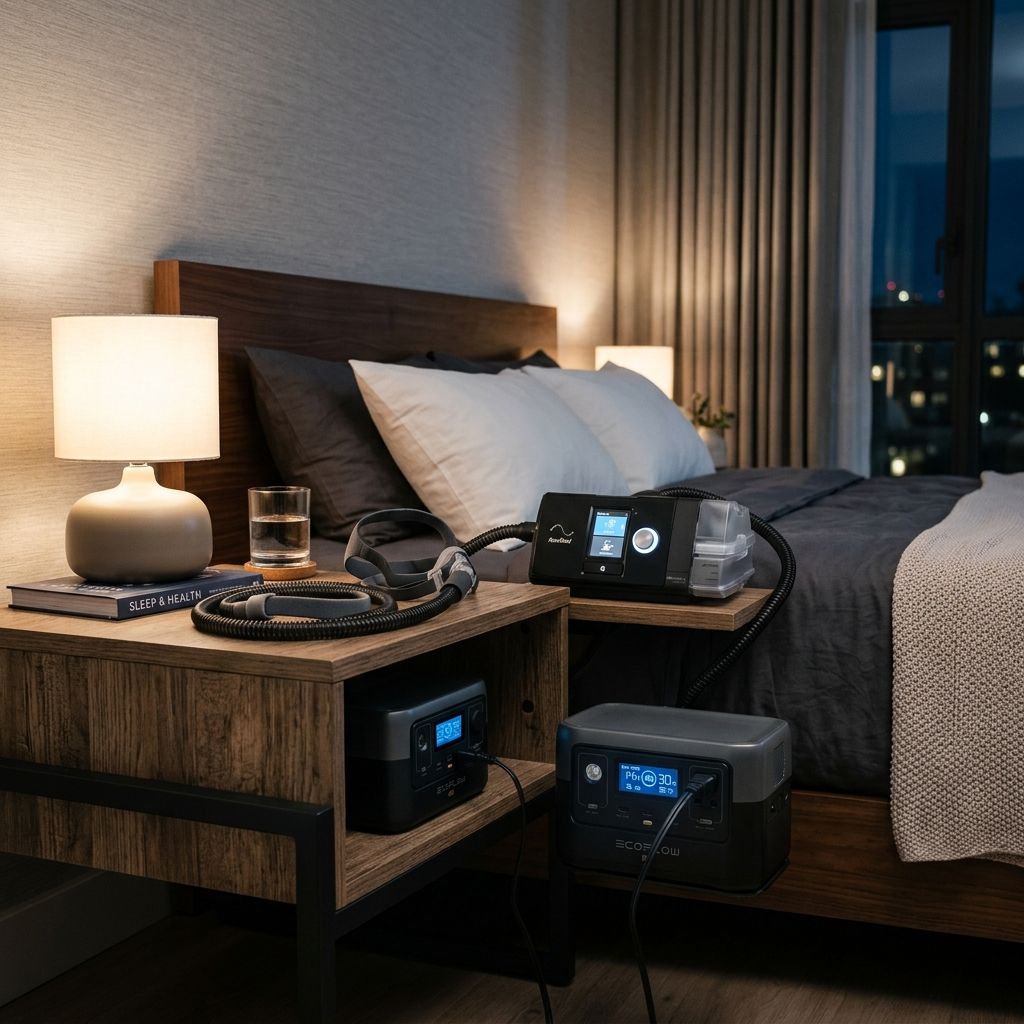
For individuals relying on Continuous Positive Airway Pressure (CPAP) machines or other home medical equipment, power outages present serious health and safety risks. Having a reliable battery backup system ensures continuous sleep therapy throughout multi-night grid disruptions.
In this guide, we break down CPAP wattage consumption, the dramatic impact of heated humidifiers on battery drain, pure sine wave inverter safety, and how to size a battery for 3 to 7 nights of outage protection.
CPAP Power Requirements: Heated Humidifier vs. Unheated
The single biggest factor dictating CPAP battery consumption is whether heat features are active:
Unheated Pressure Therapy: A standard CPAP machine running at a pressure setting of 10 cmH2O without heated humidification or heated tubing consumes only 30 to 60 Watts per hour (approx. 240–480 Watt-hours for an 8-hour night).
Heated Humidifier & Tubing Active: Warming water to humidify air increases power draw significantly to 90–120 Watts per hour (approx. 720–960 Watt-hours per night)—doubling your battery storage requirements.
Efficiency Secret: Use DC Power Adapters
Plugging your CPAP directly into a battery's DC 12V/24V port using a manufacturer DC converter bypasses AC inverter conversion losses, increasing overall battery runtime by 20% to 30%.
Pure Sine Wave Inverter Safety for Medical Equipment
CPAP machines contain sensitive microprocessors and electronic pressure sensors. Always ensure your home battery or portable power station utilizes a Pure Sine Wave AC inverter. Modified sine wave inverters produce electrical noise that can cause CPAP motors to overheat or damage internal circuit boards.
CPAP Battery Backup Sizing Guide (8-Hour Night)
| 300 Wh Portable Power Station | Unheated: 1–2 Nights | Heated: 3 Hours |
| 500 Wh Portable Power Station | Unheated: 3–4 Nights | Heated: 1 Night |
| 1,000 Wh Portable Power Station | Unheated: 6–7 Nights | Heated: 2 Nights |
| 10 kWh Home Battery System | Powers CPAP + Home Essentials for 3+ Days |
Preparing a Medical Outage Plan
1. Register with Utility Priority Services: Contact your electric utility to enroll in their Medical Baseline or Critical Needs registry for prioritized power restoration during blackouts.
2. Keep a Dedicated DC Adapter: Store a manufacturer-approved DC cable alongside your CPAP carrying case for fast connection to battery power stations.
Evidence
Sources and methodology
Article FAQ
Common questions
Can an FSA or HSA card be used to buy a CPAP battery backup?
Yes! Dedicated CPAP batteries and medical-grade power supplies are eligible medical expenses under most Flexible Spending Accounts (FSA) and Health Savings Accounts (HSA).
Written by
Battery Planning Editorial Team
The official editorial and research team for Battery Planning, providing expert battery sizing guides, specifications audits, and cost estimation planners.