Thermal Runaway in Home Batteries: Safety Ratings & Installation Clearance Rules
Understand thermal runaway mechanics, UL 9540A unit-level fire testing, NFPA 855 garage clearance rules, and off-gas mitigation in residential battery storage.
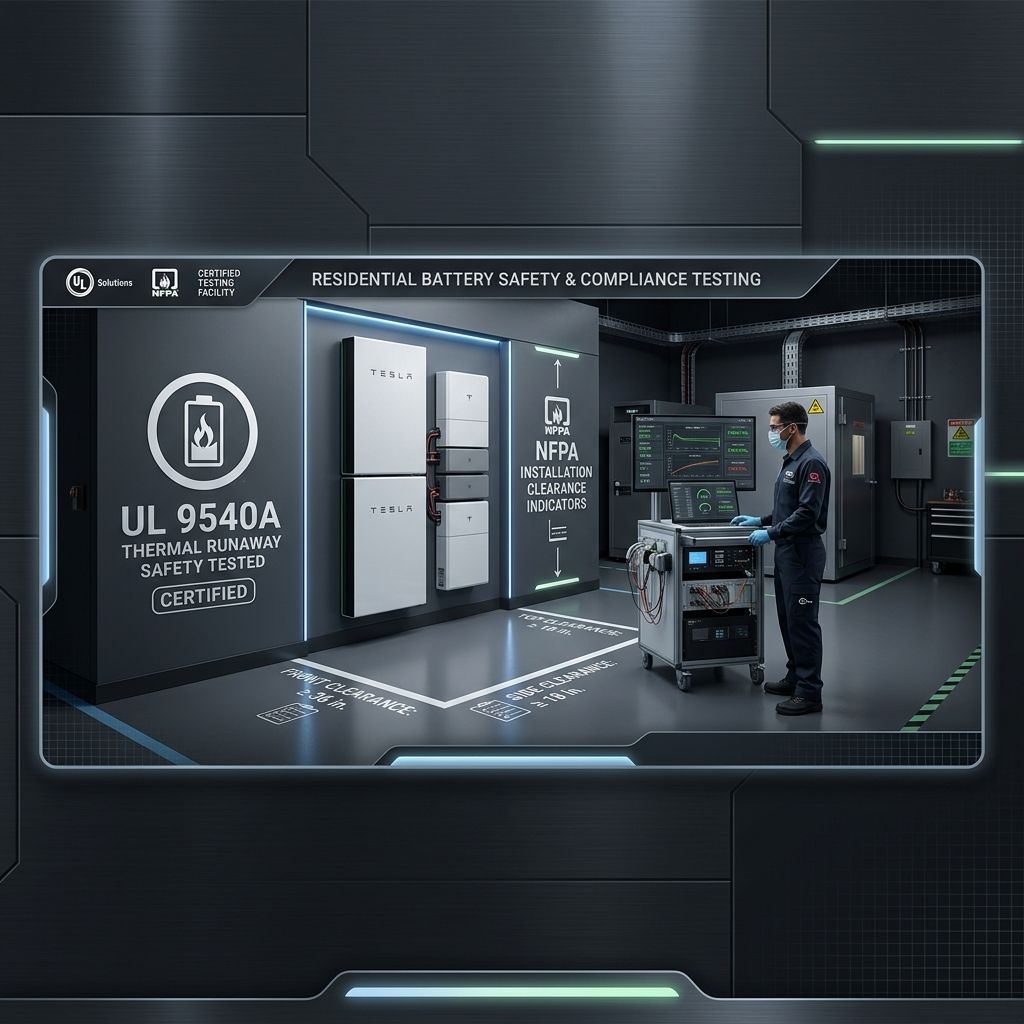
Safety is a paramount consideration when mounting a multi-kilowatt-hour battery system inside or adjacent to a residential building. Thermal runaway is the primary safety risk associated with battery storage, and understanding how modern chemistries and building codes mitigate this risk is essential.
What Causes Thermal Runaway?
Thermal runaway occurs when an internal short circuit, mechanical puncture, overcharging, or external fire causes a battery cell's internal temperature to exceed its breakdown threshold. As the separator degrades, internal energy converts rapidly to heat, releasing flammable gases.
NFPA 855 Residential Clearance Standards
The National Fire Protection Association (NFPA) Standard 855 governs the installation of stationary energy storage systems (ESS). Residential installations must adhere to the following strict distance parameters:
UL 9540 vs. UL 9540A Safety Testing
Homeowners should look for dual UL safety certifications on any battery specification sheet:
• UL 9540: System-level safety certification evaluating electrical, mechanical, and software protection between inverter, BMS, and battery enclosure.
• UL 9540A: Advanced thermal runaway propagation fire test. Manufacturers trigger artificial thermal runaway inside a single cell to prove fire does not spread to neighboring cells or wall structures.
For complete guidance on battery sizing and chemistry comparisons, visit our master Home Battery Chemistry Guide.
Written by
Maaz
Admin
5+ years of aggregated research and design experience in home battery and off-grid solar planning.