LFP vs. NMC Batteries: Which is Best for Home Backup?
Compare LFP vs. NMC home batteries. Learn about cycle life, thermal runaway temperatures, Cobalt usage, daily state-of-charge limits, and warranties.
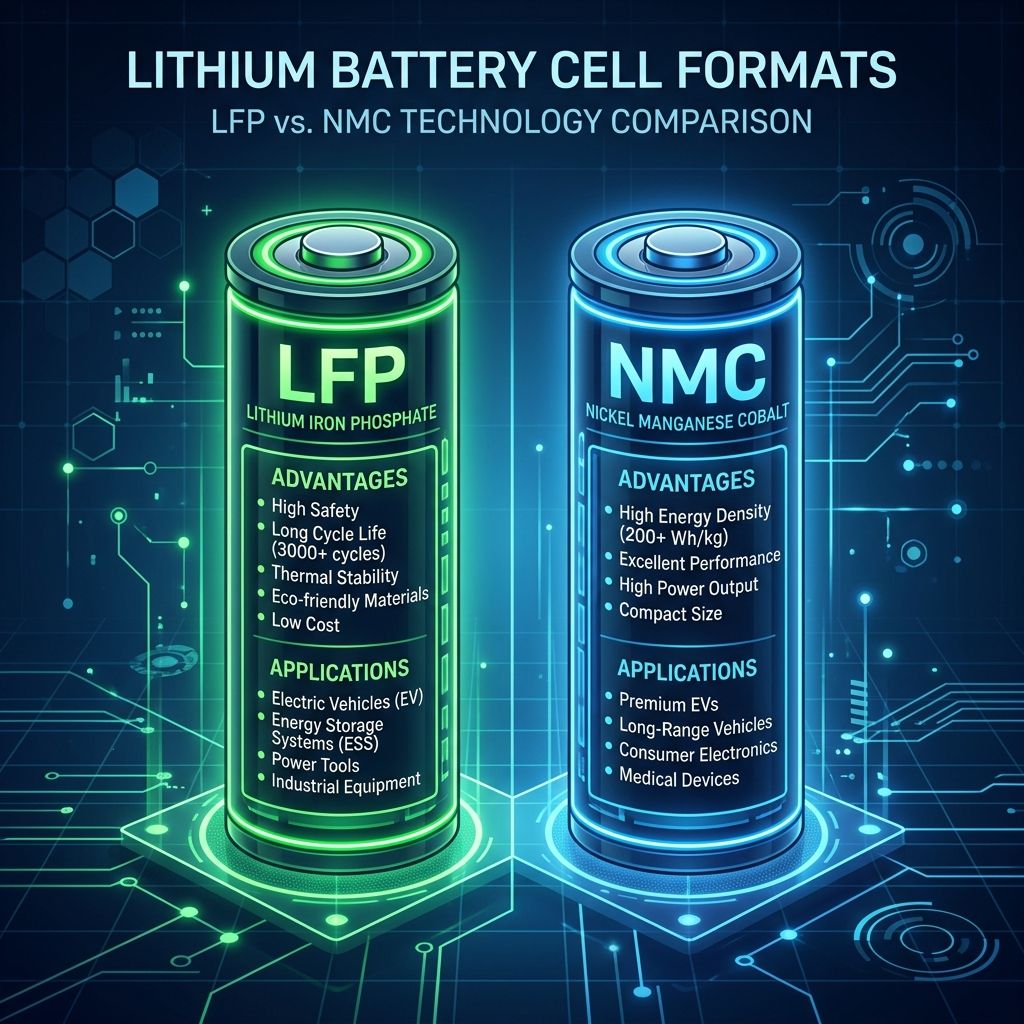
When shopping for a home battery backup system, you will quickly encounter technical terms comparing 'LFP' and 'NMC' cell structures. Most sales materials declare that their battery chemistry is superior, but they rarely explain the direct trade-offs in safety, lifecycle, and operational behaviors.
NMC (Nickel Manganese Cobalt) and LFP (Lithium Iron Phosphate) are both sub-types of lithium-ion chemical structures. While both store electricity, their internal materials yield massive differences in safety profiles and lifetimes. Sizing your system requires understanding these properties. Here is a comprehensive head-to-head analysis of LFP vs. NMC home batteries.
What is an LFP Battery? (Lithium Iron Phosphate)
Lithium Iron Phosphate (LiFePO4) chemistry utilizes iron phosphate as the cathode material. LFP is quickly becoming the dominant chemistry in the home energy storage industry. Leading modern systems—including the Tesla Powerwall 3, Enphase IQ Battery 5P, and FranklinWH aPower—use LFP cells.
LFP's primary advantage is its exceptional durability and chemical stability. It is chemically inert, meaning it is highly safety-compliant, and it has an extremely long cycle life. LFP batteries can support 4,000 to 6,000 complete charge and discharge cycles before their usable capacity drops below 70% of their original rating.
What is an NMC Battery? (Nickel Manganese Cobalt)
Nickel Manganese Cobalt (LiNiMnCoO2) chemistry utilizes a combination of nickel, manganese, and cobalt for the cathode. This chemistry is widely used in electric vehicles (EVs) because it is highly energy-dense—storing more power in a smaller, lighter package.
While NMC is great for cars where range-to-weight ratios are critical, it has clear drawbacks when used in stationary home battery storage. NMC cells degrade faster than LFP, typically supporting 2,000 to 3,000 cycles before experiencing significant capacity loss. Additionally, cobalt mining is associated with severe environmental and ethical concerns.
Key Differences Compared Head-to-Head
To choose the correct battery, look at how these chemistries behave across four crucial operational parameters:
1. Lifespan and Cycle Durability
A cycle is defined as discharging a battery from full to empty, and recharging it back to full. Because home batteries cycle daily under solar self-consumption and time-of-use (TOU) optimization plans, cycle lifespan determines your system's overall duration:
LFP: Will last 10 to 15 years of daily cycling, offering up to 6,000 cycles before reaching 70% capacity retention.
NMC: Typically lasts 5 to 8 years under daily cycling before dropping below 70% capacity retention, requiring replacement much earlier.
2. Safety and Thermal Runaway Resistance
Thermal runaway is a chemical chain reaction that occurs when a battery cell is punctured, short-circuited, or overheated, causing it to catch fire:
LFP: Has a high thermal runaway threshold of approximately 518°F (270°C). Crucially, LFP cells do not release oxygen when they break down, meaning they will not fuel a fire and are self-extinguishing.
NMC: Has a lower thermal runaway threshold of 410°F (210°C). When NMC cells decompose, they release oxygen, which acts as fuel to create intense, self-sustaining fires that are extremely difficult to extinguish.
Thermal Runaway Safety
LFP chemistry offers superior safety for indoor garage installations because it is self-extinguishing. NMC batteries require more stringent local fire barrier installations due to their lower runaway temperature threshold and oxygen-release characteristics.
3. Energy Density and Installation Footprint
NMC has a higher energy density than LFP. This means an NMC battery can store the same amount of power as an LFP battery in a package that is roughly 20% to 30% smaller and lighter. If you have extremely limited wall space inside your home utility closet, NMC can offer a more compact footprint.
4. Daily State of Charge (SoC) Behavior
How a battery likes to be charged dictates how much of its capacity you can actually use daily:
LFP: Can be charged to 100% and discharged to 10% daily without experiencing rapid degradation. This allows you to utilize almost the entire usable capacity under daily TOU rate-shifting plans.
NMC: To prevent rapid capacity loss, manufacturers recommend keeping NMC batteries between 20% and 80% state-of-charge, only charging to 100% during anticipated grid emergencies. This severely limits your daily financial savings under TOU schedules.
LFP vs. NMC Specifications Comparison Grid
The table below compares the critical specifications of LFP and NMC home battery chemistries:
LFP vs. NMC Home Battery Comparison
| Lifespan (Daily Cycles to 70% capacity) | LFP: 4,000 - 6,000 cycles | NMC: 2,000 - 3,000 cycles |
| Thermal Runaway Temperature Threshold | LFP: 518°F (270°C) | NMC: 410°F (210°C) |
| Daily Charging Level Recommendation | LFP: 100% SoC Safe | NMC: 80% SoC Recommended |
| Heavy Metals / Cobalt Extraction | LFP: None (Cobalt-Free) | NMC: High Cobalt content |
Conclusion & Purchase Recommendations
While NMC chemistry remains highly effective for electric vehicles due to weight limits, LFP is the clear winner for stationary home backup systems. LFP offers double the lifespan, superior fire safety profiles, and allows you to safely charge to 100% daily to maximize your utility bill savings. When selecting a battery, choosing an LFP system represents the best long-term investment. To estimate your payback period and calculate state rebates for these chemistries, use our interactive ROI calculator tool below:
Evidence
Sources and methodology
Article FAQ
Common questions
Are LFP batteries more expensive than NMC?
LFP cells are theoretically cheaper to manufacture because they use abundant iron and phosphate instead of expensive cobalt and nickel. However, because home battery systems package cells with advanced battery management systems (BMS) and inverters, the final retail pricing is highly comparable between the two.
Can I connect an LFP battery and an NMC battery together?
No. You cannot mix different chemistries in a single battery bank. LFP and NMC cells operate at different cell voltages and require entirely different charging curves managed by their BMS. Mixing them will destroy the cells and create severe electrical hazards.
Why do electric cars use NMC if LFP is safer?
Electric vehicles must fit a large amount of energy into a lightweight, limited physical chassis to maximize driving range. Because NMC has a higher energy density (more power per pound), it is preferred for cars. Home batteries do not move, so weight is not a primary concern—making safety and lifespan far more important.

Written by
Battery Planning Editorial Team
The official editorial and research team for Battery Planning, providing expert battery sizing guides, specifications audits, and cost estimation planners.