How to Keep a Sump Pump Running During a Power Outage
Learn how to back up your sump pump during a blackout. Calculate startup surge watts (1/3 HP vs 1/2 HP), battery runtime, and dual float switch setups.
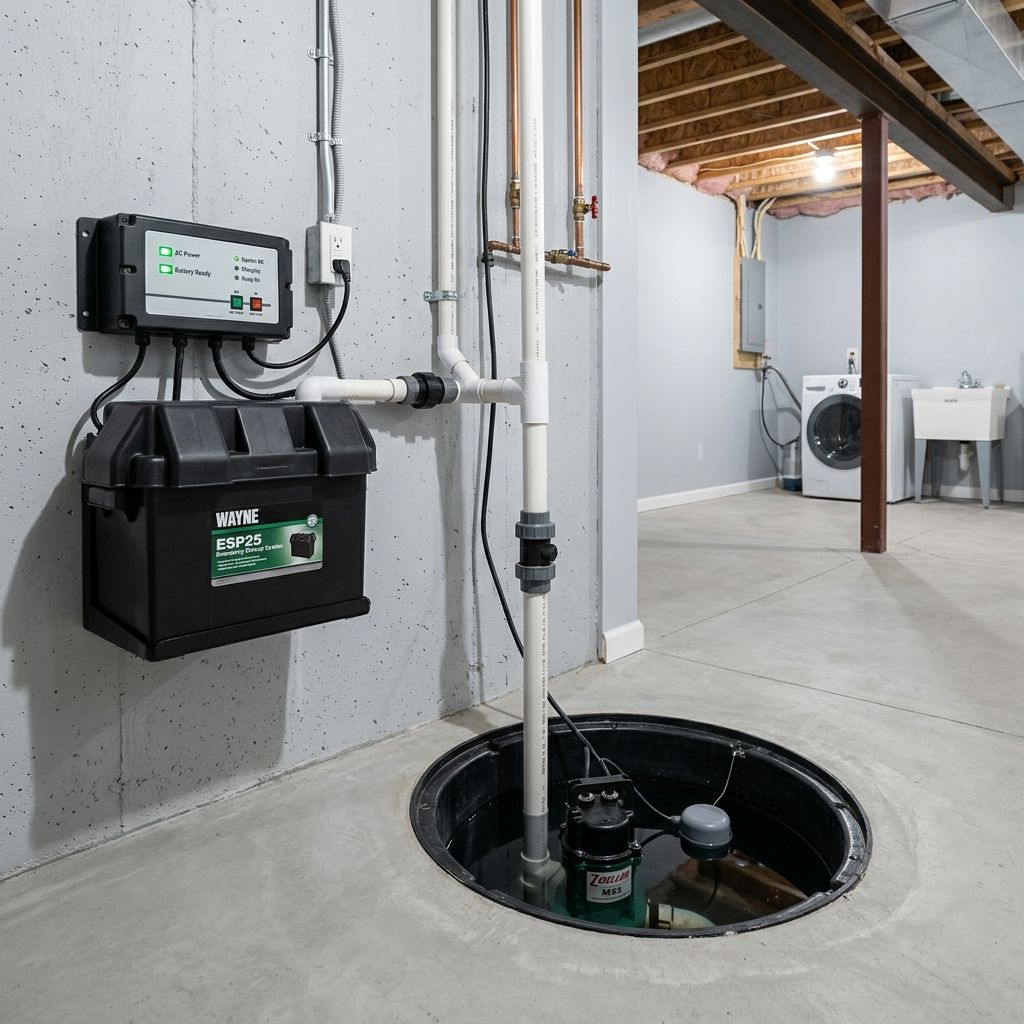
During heavy rainstorms, severe weather frequently causes simultaneous power outages and basement flooding. Relying solely on grid electricity to run your primary sump pump leaves your home vulnerable to thousands of dollars in water damage.
In this guide, we break down how to calculate sump pump startup surge currents (Locked Rotor Amps), how to size a home battery or dedicated sump pump battery backup, and how to install dual-float safety switches.
Understanding Sump Pump Power Draw: Running Watts vs. Surge Watts
Electric motor loads consume significantly more power during the initial second of startup than during continuous pumping:
1/3 HP Sump Pump: Consumes approximately 800 continuous Watts while pumping water, but requires a 1,600 to 2,000 Watt startup surge spike to overcome initial motor inertia.
1/2 HP Sump Pump: Consumes approximately 1,050 continuous Watts while pumping, but requires a 2,100 to 2,800 Watt startup surge spike.
If your battery inverter cannot support this momentary peak surge, the inverter's over-current protection will trip, disabling the pump during a rainstorm.
Inverter Surge Requirement
Always verify your battery inverter features a peak surge rating of at least 3,000 Watts before connecting a 1/2 HP sump pump to an essential loads panel.
Estimating Battery Backup Runtime During Storms
Sump pumps do not run continuously; they cycle on for 10 to 15 seconds every time the pit fills. Under moderate rainfall (cycling 30 times per hour), a 1/2 HP pump consumes roughly 0.25 kWh per hour. Therefore, a standard 10 kWh home battery can keep a sump pump operational for up to 35–40 hours of storm conditions.
Sump Pump Battery Backup Runtime Estimates
| 1/3 HP Pump (Moderate Rain) | 10 kWh Battery = 45+ Hours of Runtime |
| 1/2 HP Pump (Heavy Rainstorm) | 10 kWh Battery = 25–30 Hours of Runtime |
| Dedicated 12V Lead-Acid Backup | 100Ah Battery = 5–7 Hours of Active Duty |
| Dual 120V LFP Auxiliary Station | 2 kWh Station = 10–12 Hours of Active Duty |
Best Practices for Sump Pump Outage Protection
1. Install Dual Float Switches: Use a primary vertical float switch paired with a secondary backup float switch positioned 2 inches higher in the pit to trigger an alarm if the main switch fails.
2. Check Valve Inspection: Install a high-quality spring-loaded check valve to prevent pumped water from flowing back into the pit, reducing pump cycle frequency by up to 30%.
Evidence
Sources and methodology
Article FAQ
Common questions
Can I plug a sump pump directly into a portable power station?
Yes, provided the portable power station features a pure sine wave AC inverter rated for at least 1,500W continuous output and 3,000W surge capacity to handle the motor startup spike.

Written by
Battery Planning Editorial Team
The official editorial and research team for Battery Planning, providing expert battery sizing guides, specifications audits, and cost estimation planners.