What Size Inverter Do I Need to Run a House? (Outage Sizing Blueprint)
Learn what size inverter you need to run a house during a power outage. Calculate continuous load, motor starting surges, and pure sine wave needs.
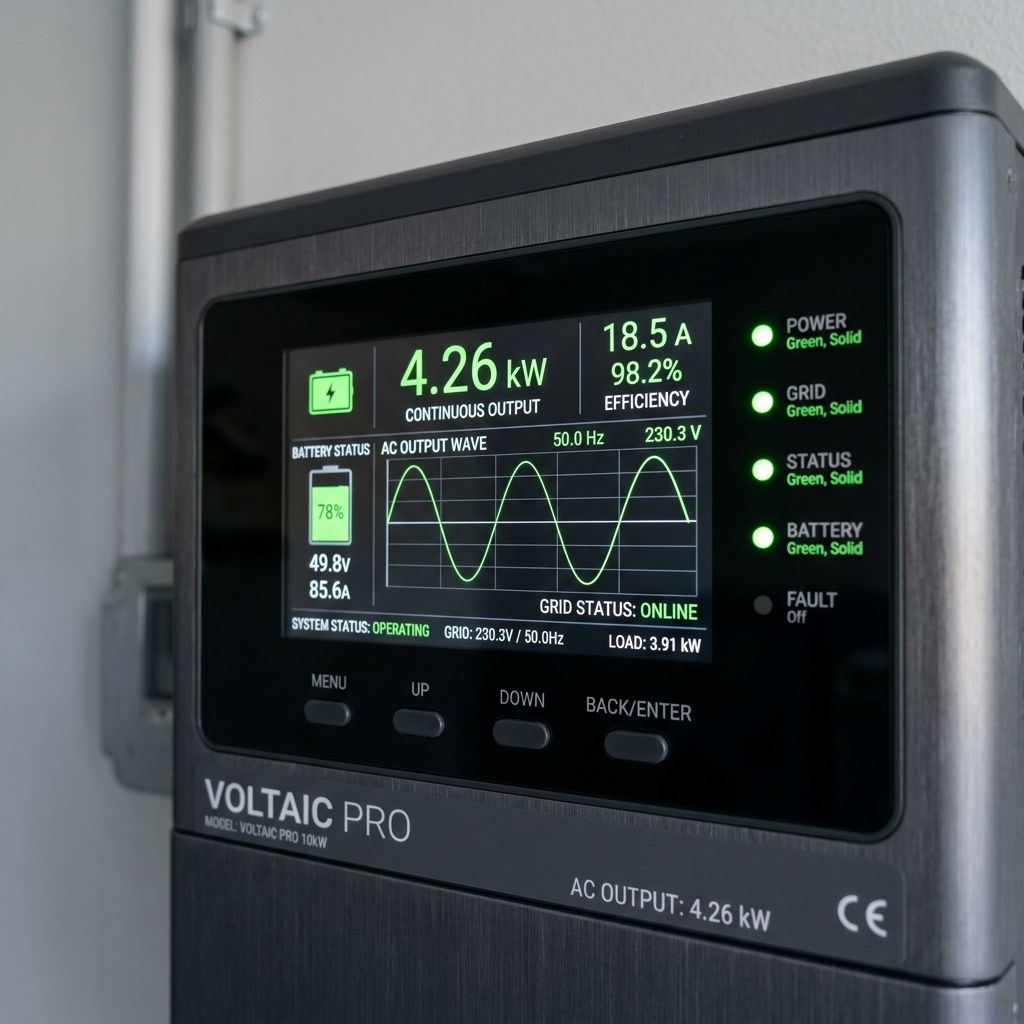
When preparing your home for emergency blackouts, selecting the right battery capacity is only half the equation. While capacity (measured in kWh) determines how many hours your backup power will last, your inverter size (measured in kW) determines which appliances you can run at the same time.
An inverter acts as the gateway of your backup system—converting the Direct Current (DC) electricity stored in your battery into the Alternating Current (AC) electricity consumed by your home's outlets. If you size your inverter incorrectly, turning on a vacuum or microwave will instantly trigger an overload shutdown. Here is our step-by-step blueprint to calculate what size inverter you need to run a house.
Understanding Inverter Sizing: Continuous Watts vs. Starting Surge
Before adding up appliance wattages, you must distinguish between two electrical output metrics:
Continuous Output (kW): The maximum electrical load the inverter can sustain indefinitely. For example, a standard home battery inverter typically supports a continuous output of 5,000 Watts (5.0 kW).
Peak Surge Output (kW): The maximum power the inverter can deliver for a very short duration (usually 1 to 10 seconds) to start electric motors. Quality home battery inverters offer starting surge ratings of 7,000 to 10,000 Watts (7.0 to 10.0 kW) to handle the initial surge of inductive loads.
What Size Inverter Do I Need to Run a Refrigerator?
The refrigerator is the single most important appliance to back up during an outage. While a refrigerator draws very little energy while running, its starting surge is surprisingly high:
Running Power: A modern, energy-efficient refrigerator draws only 100 to 200 Watts continuously while the compressor cycles on.
Starting Surge: When the compressor first kicks on, it draws an instantaneous surge current of 1,200 to 1,600 Watts. Therefore, while a refrigerator only consumes a tiny fraction of your battery's daily capacity, you need an inverter rated for at least 2,000 Watts (2.0 kW) of surge capacity to start the compressor motor safely.
How to Calculate Your Home Inverter Size (Step-by-Step)
To determine your home's minimum inverter sizing requirement, follow this 4-step auditing process:
1. List All Critical Appliances: Write down every device you plan to run simultaneously during a blackout (refrigerator, internet router, lights, sump pump, laptops).
2. Sum Their Running Wattages: Add up the continuous running power of all these devices. For example: Refrigerator (200W) + Wi-Fi (20W) + LED lights (50W) + Laptops (150W) = 420 Watts of continuous load.
3. Identify the Single Largest Starting Surge: Find the appliance with the highest starting surge requirement (e.g. a 1/2 HP sump pump requiring a 3,500W surge).
4. Combine the Figures: Add the total continuous load of the other running appliances to the single largest starting surge. This represents your minimum required inverter capacity: 420W (running load) + 3,500W (sump pump surge) = 3,920 Watts (3.92 kW).
Pure Sine Wave vs. Modified Sine Wave Inverters
How an inverter generates AC waves directly impacts appliance safety and lifespan:
Modified Sine Wave Inverters: These inverters produce blocky, stepped waves. While they are cheap, they deliver dirty power that causes smart appliances to hum, laptops to run hot, and sensitive microprocessor clocks to fail. Using a modified sine wave inverter can damage expensive refrigerators over time.
Pure Sine Wave Inverters: These inverters produce smooth, seamless waves identical to the electricity delivered by your local utility company. They run quiet, prevent electric noise, and are mandatory to protect sensitive modern home appliances.
Pure Sine Wave is Mandatory
Modern home appliances (refrigerators with digital displays, CPAP medical devices, smart panels, and laptops) rely on sensitive microprocessors. Modified sine wave inverters produce dirty power that can cause these devices to fail. Always choose a pure sine wave inverter.
Inverter Sizing Matrix for Common Households
Use the table below to identify your home's inverter sizing profile:
Home Inverter Sizing Framework
| Small Apartment (Essentials + Lights + Wi-Fi) | Recommended: 2,000W to 3,000W Inverter |
| Medium House (Essentials + Sump Pump + Laptops) | Recommended: 5,000W to 8,000W Inverter |
| Large House (Whole-Home + Central AC + Well Pump) | Recommended: 10,000W+ Inverter |
Inverter Sizing Recommendations & Next Steps
Choosing the right inverter size requires balancing your daily continuous loads with motor starting surges. While a 3,000W inverter is sufficient to run a refrigerator and critical lights, backing up heavier inductive motor loads like well pumps or HVAC systems requires a 240V split-phase inverter system rated for 8,000W or higher. To calculate your home's total continuous load profile, use our interactive sizer tool below:
Evidence
Sources and methodology
Article FAQ
Common questions
Can a home battery inverter be too large?
Yes. Larger inverters draw more standby power (often 50 to 100 Watts) just to keep their internal circuits active. If you install an oversized 10 kW inverter to power a tiny 100-Watt load, a significant portion of your battery capacity will be wasted simply keeping the inverter turned on.
What happens if I exceed my inverter's power limit?
If the combined load of your active appliances exceeds the inverter's maximum surge limit, it will detect an overcurrent condition. To protect its delicate transistors from burning out, the inverter will automatically trigger a safety shutdown, shutting off backup power until reset.
Does standard grid-tied solar run during a blackout without a battery inverter?
No. Standard grid-tied solar inverters are designed to shut down automatically during power outages to prevent grid feedback, which could injure utility workers. To keep solar panels active during blackouts, they must be paired with a grid-forming storage inverter.
Written by
Battery Planning Editorial Team
The official editorial and research team for Battery Planning, providing expert battery sizing guides, specifications audits, and cost estimation planners.