Home Battery Incentives, Tax Credits & Rebates: The Definitive 2026 Guide
Complete 2026 guide to home battery backup incentives: federal tax credits under IRS Form 5695, 3kWh capacity rules, state rebates, Virtual Power Plants, and NEM 3.0 savings.
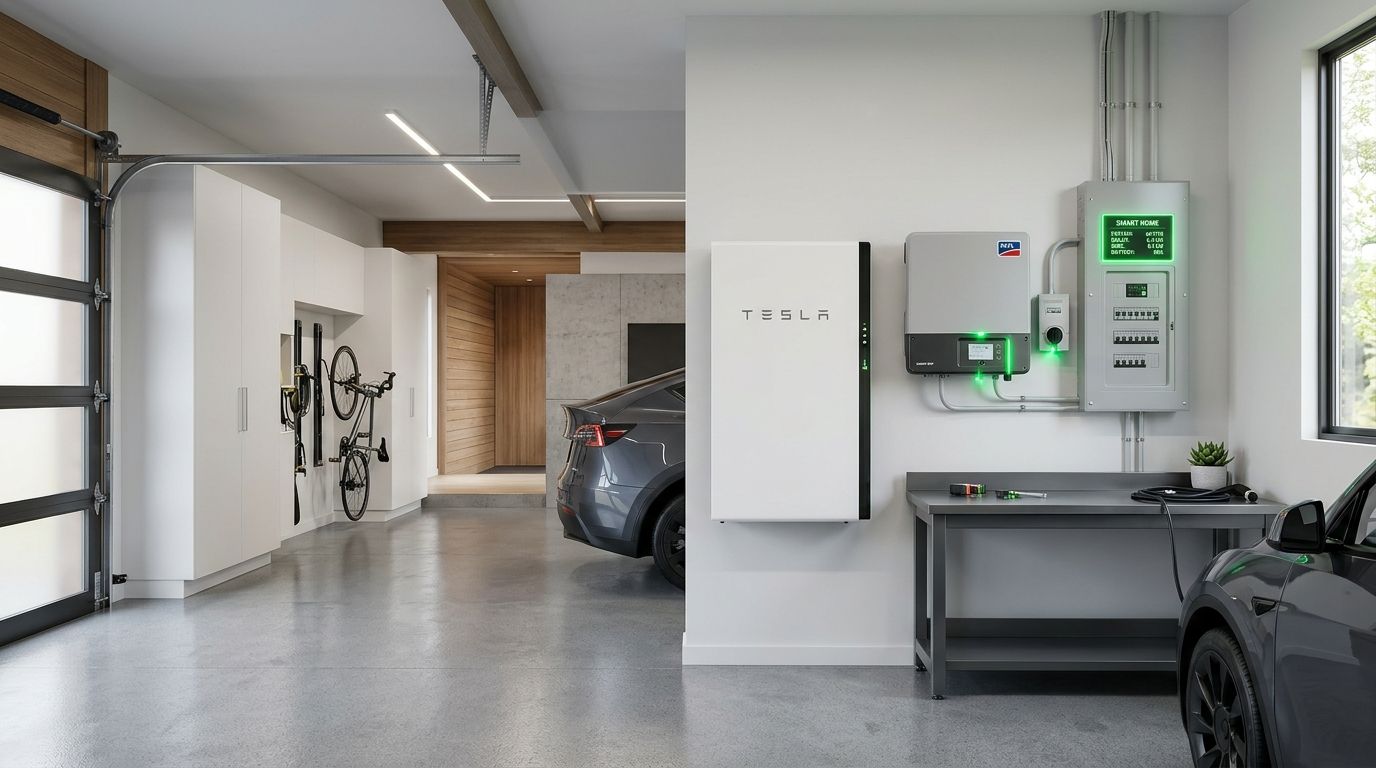
Home battery backup systems represent one of the most effective upgrades for residential resilience and energy cost control. However, with turnkey installation costs ranging between $10,000 and $25,000 for standard 10 kWh to 30 kWh setups (as detailed in our Home Battery Backup Costs Guide), financial incentives are crucial for shortening payback periods and maximizing return on investment.
Navigating the incentive landscape in 2026 can be confusing. Outdated online articles often give conflicting guidance about whether standalone batteries qualify without solar panels, how recent legislative updates impact residential tax filings, and what state-level rebates remain active. This comprehensive guide details every federal credit, state storage rebate, utility Virtual Power Plant (VPP) payout, and self-consumption savings mechanism available to homeowners today.
Executive Summary: Active Incentives at a Glance
Before examining specific tax forms and regional programs, here is how the primary home battery financial mechanisms break down for 2026:
Important Tax Disclaimer
Battery Planning provides educational guidance and engineering analysis based on official IRS publications. We do not provide professional tax, legal, or accounting advice. Always consult a certified CPA or tax professional regarding your specific tax liability and filing status before claiming credits on IRS Form 5695.
The 30% Federal Clean Energy Tax Credit (IRS Section 25D)
The centerpiece of home energy storage incentives in the United States is the Residential Clean Energy Credit under Internal Revenue Code Section 25D / Investment Tax Credit. This non-refundable federal tax credit allows eligible taxpayers to claim 30% of the total qualified installation costs against their federal income tax liability.
A pivotal milestone occurred with the implementation of standalone storage eligibility: previously, batteries had to be charged 100% by onsite solar panels to qualify for the federal tax credit. Today, standalone home batteries qualify completely on their own, meaning you can install a battery to back up your home and charge exclusively from the utility grid during off-peak hours and still claim the full 30% credit. For specific legislative details, read our consumer advisory: Is the 30% Federal Battery Tax Credit Available in 2026?.
Key Technical Eligibility Requirements
To qualify for the federal tax credit under Section 25D, your energy storage installation must meet four strict criteria:
1. Minimum 3 kWh Capacity Requirement: The battery storage system must have a manufacturer-rated capacity of at least 3 kilowatt-hours (kWh). Virtually all modern residential home batteries (e.g., Tesla Powerwall 3 at 13.5 kWh, FranklinWH aPower at 13.6 kWh, Enphase 5P at 5.0 kWh) comfortably satisfy this threshold. To evaluate capacity models, review our How to Size a Home Battery Backup System guide. Small portable power banks under 3 kWh do not qualify.
2. Installed at a Residence: The battery must be installed in a home in the United States used as a residence by the taxpayer. This includes single-family homes, townhouses, condominiums, and cooperative apartments. Both primary residences and secondary vacation homes qualify proportionally based on the time you reside there.
3. Original Use / New Hardware: The credit only applies to new, original equipment. Used, refurbished, or salvage battery packs do not qualify.
4. Expenditure Incurred: The credit can only be claimed for the tax year in which the system installation is complete and placed in service, not when the deposit is paid or the contract is signed.
What Costs Are Included in the 30% Calculation?
The 30% credit does not merely apply to the raw battery hardware. It encompasses all capitalized expenditures necessary to make the storage system operational:
• The energy storage hardware (battery units, integrated inverters, charge controllers).
• Critical load panels, automatic transfer switches (ATS), and energy gateways.
• Electrical subpanel upgrades or main service panel replacements required for safe storage interconnection.
• Permitting fees, engineering stamps, and utility interconnection application costs.
• Certified onsite electrical labor, conduit, trenching, wiring, and commissioning.
How to File IRS Form 5695 Step-by-Step
To claim the federal clean energy credit, you file IRS Form 5695 (Residential Energy Credits) alongside your annual Form 1040 federal tax return:
• Part I, Line 5b (Qualified Battery Storage Technology Costs): Enter the total gross qualified expenditure for your battery storage installation.
• Line 6a: Multiply Line 5b by 30% (0.30) to compute your preliminary credit amount.
• Line 14 & Line 15 (Tax Liability Limitation): The credit is non-refundable, meaning it cannot reduce your federal tax liability below zero or result in a tax refund check if you owe no tax. However, under Section 25D(c), any unused portion of the credit rolls over into future tax years indefinitely until fully exhausted.
3 kWh Threshold Verification Tip
Keep the manufacturer specification sheet and installer invoice on file showing the exact battery model and its nameplate capacity. If your installation includes modular battery packs (such as stacking two Enphase 5P units for 10 kWh total), the combined capacity satisfies the 3 kWh requirement.
State-by-State Home Battery Rebates & Grant Programs
In addition to the federal tax credit, numerous state governments and regional public utilities offer lucrative upfront cash rebates and grants for residential battery storage. You can calculate how these stack using our Battery ROI Calculator. In many jurisdictions, state rebates can be combined with the 30% federal credit to offset 40% to 70% of total installation costs.
California: Self-Generation Incentive Program (SGIP)
Administered by the California Public Utilities Commission (CPUC), SGIP provides upfront capital rebates for battery storage:
• General Market Tier: Offers standard rebates ranging from $150 to $200 per kWh, translating to $2,000 to $2,700 off a typical 13.5 kWh battery.
• Equity and Equity Resiliency Tiers: Designed for low-income homeowners, medical baseline customers, and communities in Tier 2 or Tier 3 High Fire-Threat Districts (HFTD) subject to Public Safety Power Shutoffs (PSPS). Rebates can reach $850 to $1,000 per kWh, often covering 85% to 100% of the entire system cost.
Massachusetts & Rhode Island: ConnectedSolutions
Operated across National Grid, Eversource, and Cape Light Compact territories, ConnectedSolutions is the country's most established residential demand response program:
• Homeowners receive an annual performance incentive averaging $275 to $300 per kW of battery capacity dispatched during summer peak demand events.
• A typical 10 kW continuous output battery generates between $1,500 and $2,500 in direct cash payments annually, guaranteeing complete battery payback within 5 to 7 years.
Maryland: Energy Storage Income Tax Credit
The Maryland Energy Administration (MEA) provides a state income tax credit equal to 30% of installed battery costs, capped at $5,000 for residential installations. This state tax credit stacks directly on top of the 30% federal tax credit, reducing gross costs by nearly 50% for Maryland residents.
Hawaii: HECO Battery Bonus Program
Hawaiian Electric offers upfront capacity payments (up to $850/kW) plus monthly bill credits for homeowners who install batteries and agree to export stored power during the evening peak window (6 PM to 8 PM) to alleviate island grid stress.
Virtual Power Plants (VPP): Turning Storage into an Annual Revenue Stream
One of the most revolutionary financial advancements in home energy storage is the rise of Virtual Power Plants (VPP). A VPP networks hundreds or thousands of distributed home batteries together using intelligent cloud software, creating a decentralized mega-battery that utilities can tap during heatwaves or extreme winter grid strain.
When you enroll your battery in a VPP (such as Tesla Electric, Sunrun Shift, or utility-specific clean energy programs), you retain complete control over your backup reserve. For example, you can set an emergency backup floor of 20% or 30%. The software only dispatches power above that floor during high-value grid events, and the utility pays you cash premiums (often $1.00 to $2.00 per kWh exported during peak events).
Time-of-Use (TOU) Arbitrage & NEM 3.0 Economics
Incentives are not limited to one-time government checks; your monthly utility bill structure creates recurring financial dividends through Solar Self-Consumption. In regions with Time-of-Use (TOU) utility rates, electricity prices fluctuate drastically between daytime off-peak hours and evening peak hours.
Under California's Net Billing Tariff (NEM 3.0), solar export compensation during daytime hours was slashed by approximately 75% to 80% (from ~30¢/kWh down to ~5¢ to 8¢/kWh). However, evening grid prices remain high (often exceeding 50¢ to 65¢/kWh during summer peak hours).
By capturing your excess daytime solar power in an onsite battery and self-consuming that power between 4 PM and 9 PM, you avoid purchasing electricity at top-tier peak rates. A properly sized home battery under NEM 3.0 saves homeowners between $1,200 and $2,400 per year compared to solar-only installations.
Cash Purchase vs. Solar Loan vs. Lease: Who Gets the Credit?
How you finance your battery backup system directly dictates which party is legally entitled to claim the 30% federal tax credit:
Pros
- Direct Ownership: Homeowner claims the full 30% tax credit directly on IRS Form 5695.
- Homeowner captures 100% of state cash rebates and utility VPP revenue checks.
- Adds verifiable equity and appraised market value to the residential real estate.
- Complete freedom to reconfigure backup circuits and storage settings without vendor restrictions.
Cons
- Leases/PPAs: Third-party leasing company claims the credit under commercial Section 48E rules.
- Lease savings are passed down as lower monthly fees rather than a lump-sum tax offset.
- Homeowner cannot claim Form 5695 on their personal tax return.
- Transferring a leased battery system to a new homebuyer can complicate future real estate transactions.
Next Steps: Sizing Your Storage for Maximum Return
To maximize your incentive capture and minimize unnecessary hardware costs, accurate capacity sizing is critical. Buying too small leaves you vulnerable during multi-day outages; buying too large increases capital expenses past the point of diminishing financial returns.
For step-by-step guidance on calculating your household kilowatt-hour demands and identifying essential backup circuits, explore our core sizing and cost authority hubs:
• How to Size a Home Battery Backup System — Step-by-step load audit, starting surge calculations, and capacity formulas.
• Home Battery Backup Costs: The Complete Pricing Guide — Equipment price breakdowns, installer labor benchmarks, and soft costs.
• Is the 30% Federal Battery Tax Credit Available in 2026? — Deep-dive consumer advisory on legislative timelines and lease vs. cash eligibility.
• Interactive Battery ROI Calculator — Estimate custom utility savings, tax deductions, and payback timelines.
Evidence
Sources and methodology
Article FAQ
Common questions
Do standalone home batteries qualify for the 30% federal tax credit without solar panels?
Yes. Under the amended Section 25D rules, standalone energy storage systems with a capacity of at least 3 kWh qualify for the full 30% residential clean energy credit, even if charged exclusively from the utility grid.
What happens if my 30% tax credit exceeds my federal tax liability for the year?
The Section 25D credit is non-refundable, meaning it cannot generate a tax refund beyond what you owe. However, any unused credit rolls over to the following tax year indefinitely until the entire amount is utilized.
What is the minimum battery capacity required to qualify for the federal tax credit?
IRS regulations mandate a minimum manufacturer-rated capacity of 3 kilowatt-hours (kWh). Most standard home battery systems (such as Tesla Powerwall 3 at 13.5 kWh or Enphase 5P at 5 kWh) easily meet this threshold.
Can I combine state battery rebates with the 30% federal tax credit?
Yes, in most cases state rebates (such as California SGIP or Maryland MEA credits) can be stacked with the federal credit. However, under IRS rules, utility upfront subsidies may reduce the eligible depreciable basis before calculating the 30% federal credit.
Written by
Battery Planning Editorial Team
The official editorial and research team for Battery Planning, providing expert battery sizing guides, specifications audits, and cost estimation planners.