Portable Power Station vs. Home Battery Backup: Sizing, Solar Charging, and Off-Grid Capability
Technical comparison between portable solar generators (EcoFlow, Jackery, Bluetti) and whole-home battery banks (Tesla Powerwall 3, Enphase 5P). Compare inverter surge limits, subpanel wiring, and $/Wh efficiency.
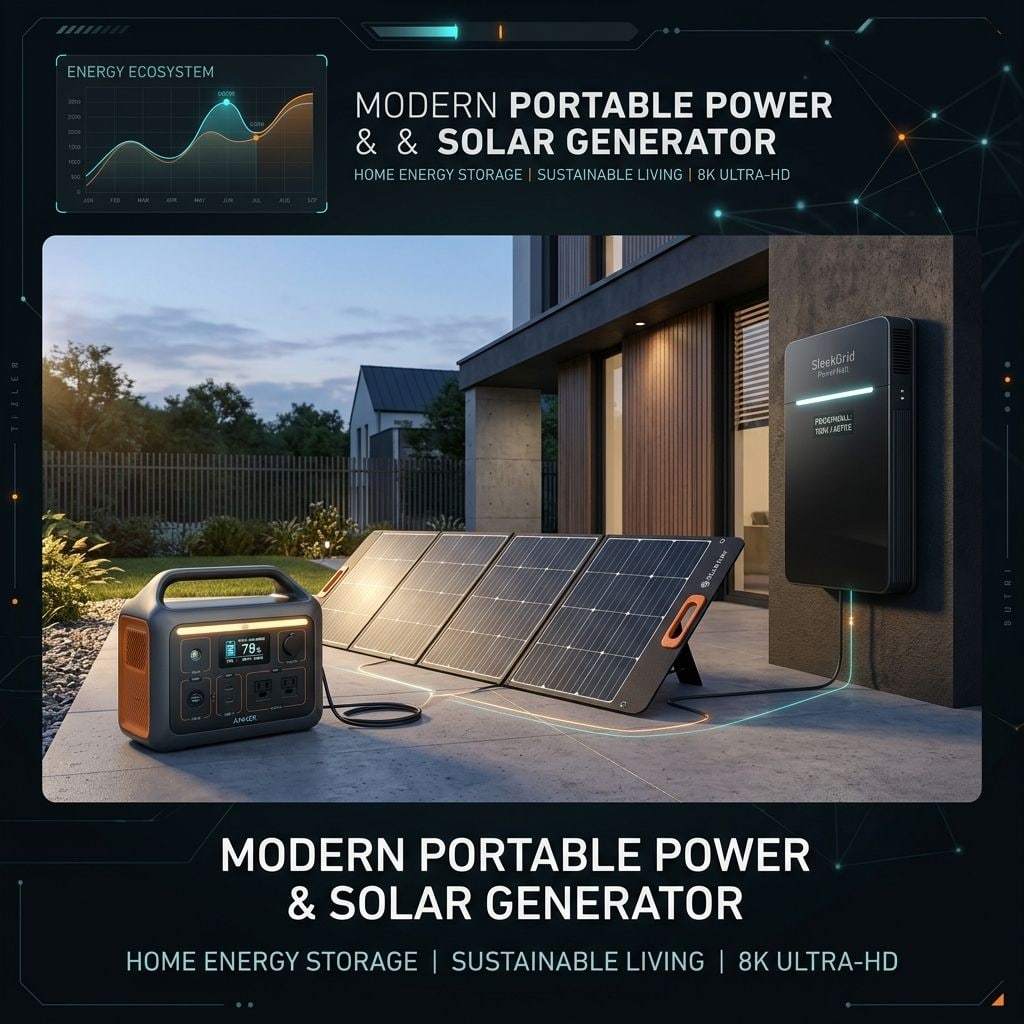
Selecting between a portable power station (commonly called a solar generator) and an installed permanent home battery backup system is a pivotal decision for homeowners seeking blackout protection, emergency power, or off-grid independence.
While permanent energy storage systems like the Tesla Powerwall 3, Enphase IQ Battery 5P, and FranklinWH aPower integrate directly into your home's main electrical service panel, modern high-capacity portable units (such as the EcoFlow Delta Pro Ultra, Bluetti EP500Pro, and Jackery 2000 Plus) offer substantial inverter power outputs and modular battery expansion without costly electrical permits or contractor fees.
Architectural Comparison: Portable Solar Generator vs. Hardwired Home Battery
A portable power station combines an LFP (Lithium Iron Phosphate) battery pack, an MPPT solar charge controller, a pure sine wave AC inverter, and multiple high-amperage outlets into a mobile enclosure. Installed home batteries are fixed electrical appliances wired directly to a dedicated backup subpanel via an automatic transfer switch (ATS).
Inverter Surge Capacity & Essential Load Sizing
When sizing a portable battery unit for home emergency backup, motor startup surge wattage dictates whether your inverter can start heavy appliances like refrigerator compressors, sump pumps, well pumps, and portable air conditioners.
A typical 1,000W portable power station with a 2,000W surge inverter can easily run an ENERGY STAR refrigerator (150W continuous, 1,200W surge) for 8 to 12 hours. However, running central heat pumps or well pumps requires 240V split-phase output available in dual-unit portable systems or permanent home batteries.
Solar Panel Charging Math & MPPT Voltage Limits
The true off-grid capability of a portable power station depends on its maximum solar PV input rating. Charge controllers use Maximum Power Point Tracking (MPPT) to convert high-voltage solar DC input down to battery charging levels.
How to Choose: Decision Framework
Use this simple decision criteria to select the right backup solution for your home:
• **Choose a Portable Power Station if:** You rent your home, need mobility for RV/camping trips, want a setup cost under $3,000, or want emergency backup without waiting for utility permits.
• **Choose an Installed Home Battery if:** You own your home, have existing roof solar panels, want seamless 10ms automatic blackout transfer, and need to power 240V central HVAC systems during extended multi-day power outages.
Explore Portable Power Deep Dives
To explore specific solar panel charging setups and outdoor camping reviews, read our supporting cluster guides:
• How to Charge a Portable Power Station with Solar Panels (Sizing & Charging Times)
• Best Portable Battery Backup for Camping, RV, and Emergency Power Outages
Article FAQ
Common questions
Can a portable power station run a house during a power outage?
Yes, high-capacity portable power stations (2,000Wh to 6,000Wh) with 30A or 50A outputs can power essential home circuits—such as refrigerators, lights, Wi-Fi routers, and outlets—when connected to a manual transfer switch.
Is a portable solar generator better than a standby gas generator?
Portable solar generators operate silently with zero toxic emissions, zero indoor fuel storage hazards, and zero maintenance. Standby gas generators provide higher peak output but require continuous fuel supply, regular oil changes, and produce high noise.
Can I leave a portable power station plugged into AC wall power continuously?
Modern portable power stations with EPS/UPS functionality can stay plugged in continuously. They pass utility grid power directly to connected appliances until a grid blackout occurs, at which point internal battery power takes over in under 20 milliseconds.
How long will a 2,000Wh portable battery run a refrigerator?
A standard ENERGY STAR refrigerator drawing an average of 150 watts will run for approximately 11 to 14 hours on a 2,000Wh portable power station (accounting for 85% inverter conversion efficiency).
Written by
Battery Planning Editorial Team
The official editorial and research team for Battery Planning, providing expert battery sizing guides, specifications audits, and cost estimation planners.