How to Charge a Portable Power Station with Solar Panels (Sizing & Charging Times)
Complete technical guide to pairing solar panels with portable power stations. MPPT charge controller limits, VOC voltage calculations, series vs. parallel wiring, and solar recharge times.
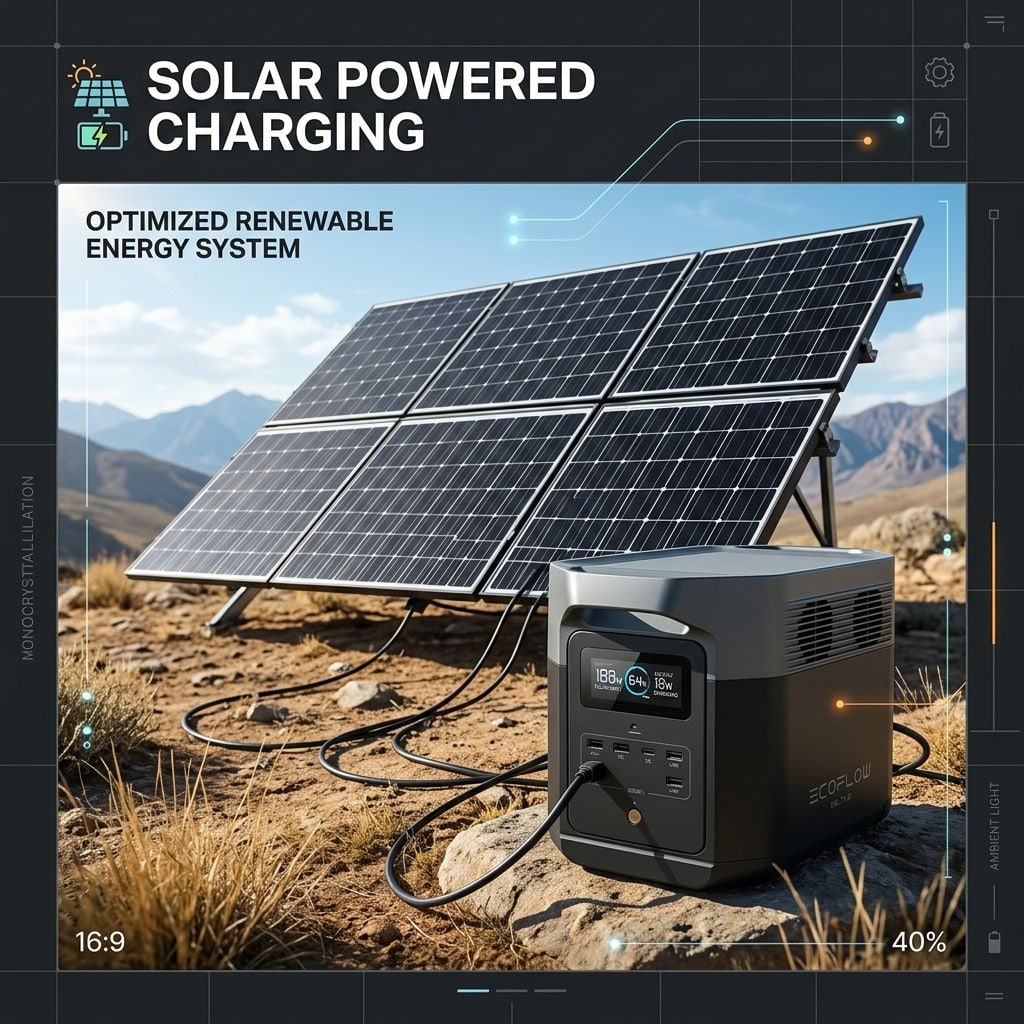
Solar charging is the defining feature that transforms a portable battery bank into an infinite off-grid solar generator. However, connecting solar panels to a portable power station requires understanding voltage limits, current thresholds, and solar charge controller math.
Understanding MPPT Voltage & Current Limits
Every portable power station specifies strict solar input parameters on its technical spec sheet:
1. **Maximum Voltage (VOC):** The total open-circuit voltage of your solar array must NEVER exceed the power station's maximum DC input voltage (e.g., 60V, 150V, or 500V). Exceeding max VOC will instantly burn out the internal charge controller.
2. **Maximum Amperage (Current):** The MPPT controller will safely clip excess current if panel amperage exceeds the controller limit (e.g., 12A or 15A max).
Steps to Connect Solar Panels to Your Power Station
For complete comparisons between portable units and installed battery systems, return to our master Portable Power Station Guide.
Written by
Battery Planning Editorial Team
The official editorial and research team for Battery Planning, providing expert battery sizing guides, specifications audits, and cost estimation planners.