Home Battery Buying Guide: How to Choose a Battery Backup System
Learn how to choose a home battery backup system. Compare LFP vs NMC chemistry, AC vs DC coupling, turnkey installation costs, and federal tax credits.
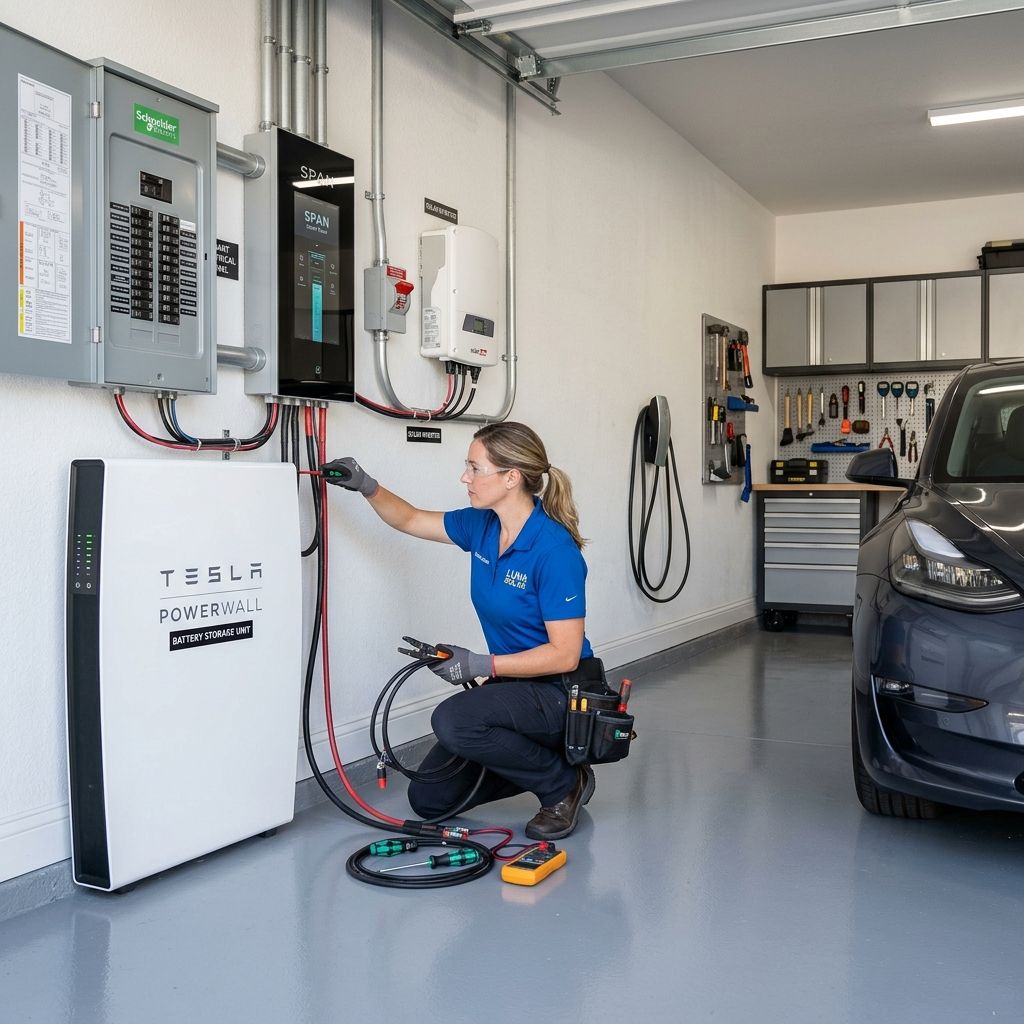
As electricity prices continue to skyrocket and extreme weather events cause longer, more frequent grid failures, homeowners are increasingly turning to home energy storage. Installing a home battery backup system is no longer just a luxury for tech enthusiasts; it has become a practical necessity for energy security and financial optimization.
However, navigating the current home battery market can be overwhelming. With dozens of manufacturers, complex acronyms like LFP and NMC, conflicting coupling configurations (AC vs. DC), and significant differences in installation pricing, choosing the right battery requires a structured approach. If you purchase the wrong system, you could end up with a battery that trips during start-up or fails to recoup its installation costs. This buying guide walks you through every parameter to ensure you make an informed investment decision.
Why Buy a Home Battery Backup System?
Before comparing brands and specifications, you must define your primary goals. Homeowners typically buy batteries for three key reasons, each of which dictates different sizing and hardware priorities.
Blackout Protection and Emergency Power
The most immediate benefit of a home battery is automatic blackout protection. Unlike noisy, fossil-fuel standby generators, home batteries switch on instantly and silently during an outage. In most cases, the transition takes less than 16 milliseconds, meaning your computers, internet routers, and home security systems will remain active without rebooting.
If backup power is your primary goal, you must design a critical loads panel. This panel separates essential loads (refrigerators, well pumps, lighting) from heavy luxury loads (hot tubs, dryers) to extend your backup runtime from a few hours to several days.
Saving Money with Time-of-Use (TOU) Rates
If you live in an area with Time-of-Use (TOU) utility pricing, you pay different electricity rates depending on the time of day. Under these rate schedules, peak hours (typically late afternoon and evening) can cost double or triple the rate of off-peak hours. A home battery allows you to perform load shifting: you charge the battery during cheap off-peak hours (or via solar panels) and discharge it to power your home during expensive peak hours, bypassing utility charges completely.
Grid Independence and Solar Self-Consumption
For homes equipped with solar panels, a battery maximizes solar self-consumption. During the middle of the day, solar arrays often generate more electricity than a household consumes. Without a battery, this excess is exported back to the grid. In states with reduced net metering credit rates (like California's NEM 3.0), exporting solar power is financially unfavorable. Storing that excess power locally and consuming it at night ensures you extract maximum economic value from every kilowatt-hour your solar panels produce.
Key Factors to Evaluate When Buying a Battery
To choose the correct battery, you must look beyond brand names and evaluate four critical technical parameters.
Coupling Selection Tip
DC-coupled batteries (like the Tesla Powerwall 3) are more efficient when paired with new solar installs, while AC-coupled batteries (like the Enphase 5P) are easier to retrofit onto existing solar arrays.
1. Battery Chemistry: LFP vs. NMC
Modern residential storage has shifted almost entirely to lithium-ion chemistry, split into two main sub-types: Lithium Iron Phosphate (LFP) and Lithium Nickel Manganese Cobalt (NMC). LFP is quickly becoming the dominant chemistry because it offers superior thermal stability, safety, and lifespan (up to 6,000 charge cycles). NMC is more energy-dense and compact, which is useful when wall space is limited, but it has a shorter lifespan (around 2,000 to 3,000 cycles) and a slightly higher thermal runway profile.
2. Power Output (kW) vs. Stored Energy Capacity (kWh)
When buying a battery, you must distinguish between capacity and output. Capacity (kWh) measures how much energy the battery can store, which determines your total backup runtime. Power output (kW) measures the rate at which the battery can discharge that energy at any single second. If your battery has a large capacity but low power output, it will trip if you turn on multiple high-draw appliances simultaneously.
3. AC-Coupled vs. DC-Coupled System Designs
In a DC-coupled system, solar panels and batteries feed into the same hybrid inverter. This reduces energy losses because electricity remains in DC format until it is converted for household use. In an AC-coupled system, the battery has its own dedicated inverter. This requires converting DC solar power to AC, and back to DC to charge the battery. While AC-coupled systems lose about 1% to 3% more energy in conversion, they are far easier to retrofit onto existing solar systems because they work independently of your existing solar inverter.
4. Round-Trip Efficiency and Warranty Degradation Rates
Round-trip efficiency measures how much energy you get back out of the battery for every unit you put in. Top-tier systems offer efficiencies between 88% and 92%. Additionally, review the manufacturer's warranty: look for a guarantee of at least 10 years that specifies the battery will retain at least 70% of its original capacity at the end of the warranty period.
Top Home Battery Backup Systems of 2026
Let's review the three leading residential storage options available on the market today. Each system represents a different architectural philosophy and feature set.
Tesla Powerwall 3 (13.5 kWh Usable)
The Tesla Powerwall 3 is a DC-coupled hybrid battery that integrates a powerful solar inverter directly into the unit. This makes it the leading choice for new solar-plus-storage installations, offering high efficiency and massive power output.
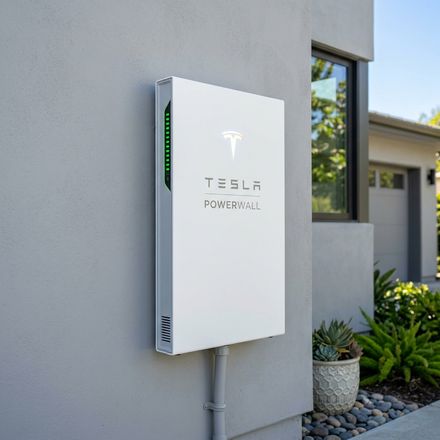
Tesla Powerwall 3
A high-power, DC-coupled LFP battery with an integrated hybrid solar inverter. Ideal for new installations and starting heavy electric loads.
Compare Powerwall 3 SpecsPros
- 11.5 kW continuous power output and high starting surge capability.
- Integrated solar inverter simplifies design and reduces installation costs.
- Excellent price-per-kWh value.
Cons
- Cannot easily retrofit onto existing non-Tesla solar arrays without adding AC coupling panels.
- Requires outdoor or spacious garage wall footprint.
FranklinWH aPower (13.6 kWh Usable)
The FranklinWH aPower is a heavy-duty, AC-coupled LFP battery designed for whole-home backup. It is managed by a smart energy controller that automatically cycles loads to keep the system running during extended outages.
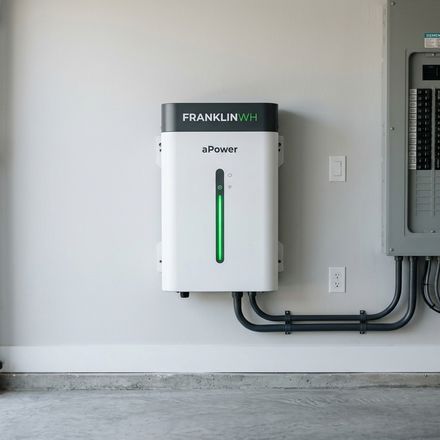
FranklinWH aPower
An AC-coupled LFP storage system featuring the aGate smart energy controller. Designed for robust whole-home backup and generator integration.
Check FranklinWH EconomicsPros
- Supports direct integration with standby generators.
- aGate smart gateway manages automatic critical load shed controls.
- Robust LFP chemistry with excellent thermal stability.
Cons
- Slightly higher equipment and gateway setup cost.
- Heavy footprint requiring professional structural mounting.
Enphase 5P (5.0 kWh Usable)
The Enphase IQ Battery 5P is a compact, modular AC-coupled battery that utilizes microinverter architecture. It is ideal for retrofitting existing Enphase solar systems and allows homeowners to scale their storage in small 5 kWh increments.
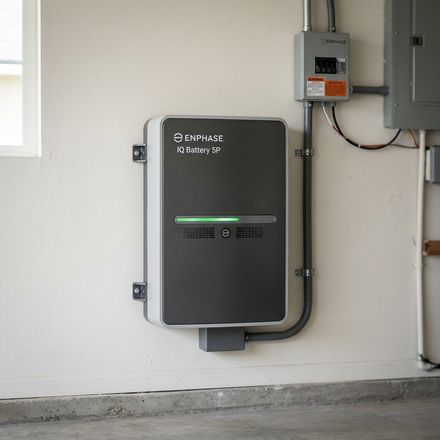
Enphase IQ Battery 5P
A compact 5 kWh modular battery utilizing distributed microinverters. Perfect for scaling storage capacity incrementally and easy retrofits.
Calculate Enphase PaybackPros
- Modular architecture allows sizing storage exactly to budget.
- AC-coupled microinverter integration makes solar retrofits simple.
- Excellent high-speed communication integration with Enphase solar arrays.
Cons
- Lower base power output per unit (requires linking multiple units for heavy loads).
- Higher cost-per-kWh when purchasing a single unit.
Spec Comparison Matrix
Home Battery Comparison Summary (2026)
| Tesla Powerwall 3 (13.5 kWh Usable / 11.5 kW output) | LFP Chemistry / DC-Coupled / Integrated Inverter |
| FranklinWH aPower (13.6 kWh Usable / 5.0 kW output) | LFP Chemistry / AC-Coupled / Standby Generator Port |
| Enphase IQ Battery 5P (5.0 kWh Usable / 3.8 kW output) | LFP Chemistry / AC-Coupled / Modular Design |
Understanding Installation Costs and Financial Incentives
When budgeting for a home battery, you must look at turnkey pricing rather than hardware-only retail prices. Turnkey pricing includes permitting, engineering, electrical panel upgrades, smart gateways, and labor.
Equipment Costs vs. Turnkey Installation Pricing
While a 10 kWh battery might cost $7,000 to $9,500 in equipment retail, the turnkey installation cost typically ranges from $12,000 to $17,000. Upgrading an outdated main electrical panel, installing a critical loads subpanel, or adding custom structural mounts can add several thousand dollars to the labor bill.
The 30% Federal Clean Energy Tax Credit (Section 25D)
The single largest financial incentive is the Residential Clean Energy Credit (Section 25D). This federal tax credit allows you to deduct 30% of the entire turnkey installation cost from your federal taxes. The credit applies to both battery hardware and installer labor, with no cap on the project size. It is critical that your battery capacity is at least 3 kWh to qualify under federal guidelines.
Local State Rebates and Utility SGIP Programs
Many states offer additional rebates. In California, the Self-Generation Incentive Program (SGIP) provides rebates that can cover a significant portion of battery costs, particularly for homes in high-fire threat districts. Utility companies also offer virtual power plant (VPP) programs, paying homeowners monthly credits to export stored battery power to the grid during emergency events.
Financing Options: Cash, Loans, Leases, or PPAs
How you finance your battery will heavily influence its financial return on investment. Evaluate the three primary financing models below.
Cash Purchase (Maximizing Lifetime ROI)
Paying cash yields the highest lifetime return. You avoid interest fees, own the equipment immediately, and can claim the 30% federal tax credit directly on your tax return. Cash purchases typically result in a payback period of 7 to 9 years, followed by 10+ years of pure utility savings.
Solar & Storage Equipment Loans
If you choose a loan, look for low-interest solar equipment loans. While you still qualify for the 30% tax credit, the interest charges will extend your payback period by 2 to 4 years. Ensure the loan has no pre-payment penalties so you can apply your federal tax rebate directly to the principal.
Leases and Power Purchase Agreements (PPAs)
Under a lease or PPA, a third-party financier owns the battery. You pay a fixed monthly fee to use the storage. While this eliminates upfront installation costs, the third-party company claims the 30% tax credit, not you. Leases also contain escalators that increase payments over time, reducing the long-term ROI.
Step-by-Step Purchasing Checklist
When you are ready to request installer quotes, follow this structured roadmap to ensure a secure purchase.
How to Find and Vet Certified Installers
Do not hire a general contractor. Ensure the installer is a certified dealer for the specific brand you are purchasing (e.g. a Tesla Certified Installer). Certified installers have completed specialized training, ensuring correct wiring and maintaining warranty compliance.
Critical Questions to Ask During Your Site Audit
Questions to Ask Your Solar and Battery Installer
- Is a main service panel upgrade required, or can we install a critical loads panel instead?
- Does the quote include the cost of the smart gateway (e.g. Tesla Gateway or FranklinWH aGate)?
- Will the battery be installed indoors or outdoors, and does temperature affect the warranty?
- Are you an authorized dealer, and will you handle the local utility interconnection paperwork?
Conclusion
Choosing the right home battery backup system requires aligning your electrical loads, chemistry choices, coupling preferences, and financial budget. Remember that the best home battery is not necessarily the largest or most expensive model, but the one that matches your household consumption profile and yields the best long-term return on investment.
Evidence
Sources and methodology
Article FAQ
Common questions
Do I need solar panels to buy a home battery?
No. You can install a home battery system and charge it directly from the grid during cheap off-peak hours, then use it during outages or discharge it during expensive peak hours to save money.
What is the lifespan of an LFP home battery?
LFP batteries generally last 10 to 15 years, supporting between 5,000 and 8,000 cycles before degrading to 70% capacity.
Can I stack multiple batteries of different brands?
No. Systems must use the same battery models and brands in parallel to ensure communications and electrical safety match.

Written by
Battery Planning Editorial Team
The official editorial and research team for Battery Planning, providing expert battery sizing guides, specifications audits, and cost estimation planners.